
They say the world ends at Ushuaia, Argentina. But that’s not entirely true. Just an hour away, across the icy waters of the Beagle Channel, lies Puerto Williams, a small, unassuming town on the Chilean side. The place that holds the record for being the southernmost inhabited settlement on Earth. It’s quiet here, isolated at the edge of the world, where the vastness of the southern hemisphere feels overwhelming.
I’m aware that the season has passed, and winter has arrived sooner than it should. There won’t be much to do on this island. The winds will howl through empty streets, the mountains shrouded in snow, and the sea gray and restless. Yet, how could I not make this journey? This could be the furthest point south I will ever reach, unless I venture to Antarctica itself. Centuries ago, Magellan and Charles Darwin navigated these very waters, their voyages changing the course of history forever. Their stories echo in the wind here. How could I not follow, even just in spirit, the path of those who ventured into the unknown, standing at the edge of the world, staring into the vast expanse of possibility? The saying that “the journey is more important than the destination” feels particularly apt for me at this moment.


After applying for a tourist visa to Argentina—an inevitable step thanks to my passport’s limitations—I made my way to Tres Puentes, the northern part of city of Punta Arenas, to inquire about the ferry. The once-weekly trip to Puerto Williams was scheduled for Thursday, which meant I had four more days to kill in this windswept southern city.
On the first day, I visited the King Penguin Colony in Tierra del Fuego, a sight of majestic creatures in their natural habitat. Then three days I cooked, ate and slept. With my sprained ankle, thanks to W -trekking in Torres Del Paine national park, I walked as much as I could through the city in between, feeling the pulse of Punta Arenas.
The journey begins
And now it’s Thursday. I’m back at the port, waiting for the call to board the Yaghan, my ferry to Puerto Williams. As I linger by the ticket counter, following the instructions of the woman behind the glass, I notice passengers boarding without hesitation. Not wanting to miss out, I follow suit. A sharp pang of disappointment hits me when I realize all the window seats are taken—except for one, tucked away at the back. I hurry to claim it, tossing my bag onto the seat just in time.
The ferry, Patagon, which had taken me to Tierra del Fuego a few days earlier, is docked nearby, preparing for its own return trip to Porvenir. Unlike Patagon, the Yaghan is smaller, with no fancy cafeteria or entertainment rooms. But I suspect the views it offers will more than make up for any lack of comfort.

Suddenly, the horn blares to life, a deep, resonant sound that signals our departure. We are setting sail. Thus begins the 32-hour journey to the end of the world, through a landscape that feels utterly foreign and yet beckons with the promise of discovery. This is a place where the familiar slips away, replaced by a vast wilderness of jagged mountains, icy waters, and untamed beauty. The adventure has begun.
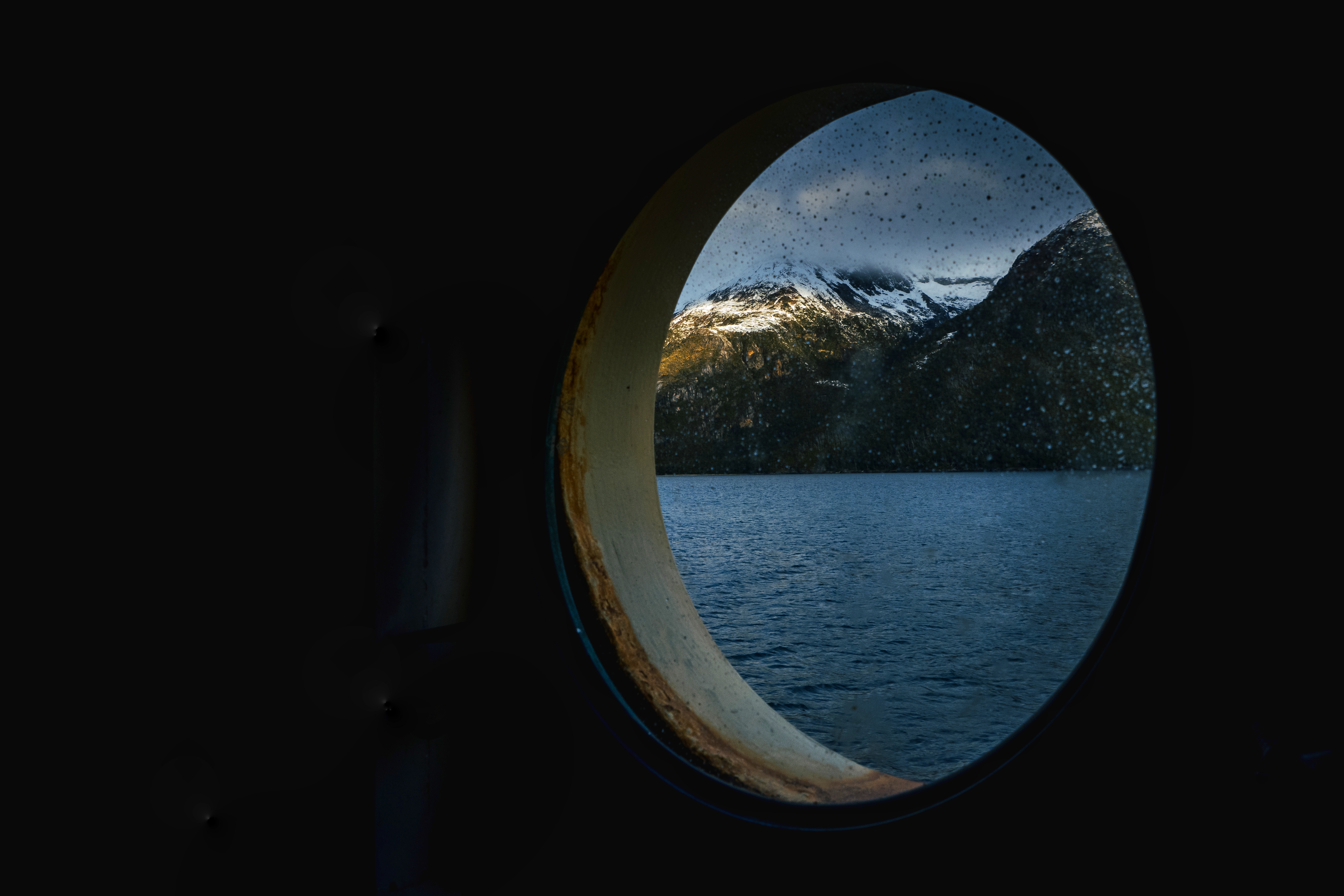
The call for dinner comes sooner than I expected. Honestly, I have no idea what the food situation is on board. Standing in the cafeteria, trying to figure it out, a fellow passenger notices my confusion. “It’s all included in the ticket,” he says, reassuring me. Relieved, I join the line of passengers, all patiently waiting with plates in hand to scoop up spaghetti and meatballs—tonight’s meal. I find a seat at the far end of the room, near a classic round porthole. Through it, I gaze out at the Strait of Magellan, the same waters navigated centuries ago by Captain Magellan on his voyage from the Atlantic to the Pacific, seeking a path to circle the globe. Outside, the daylight is fading fast, the horizon slowly swallowed by darkness. There’s little for me to do tonight but sleep through it.
Back in the cabin, people are settling in after dinner. The city lights of Punta Arenas have long since disappeared. Suddenly, something catches my eye—far out in the water, a large mass surfaces briefly before disappearing beneath the waves again. Could it be a whale? A dolphin? I remember the photo I took earlier of a poster in the hallway. Pulling out my phone, I study the picture. It lists all the trip’s highlights, and one of them is the chance to spot blue whales in these waters.
I scan the sea again, hoping for another glimpse, but the darkness has taken over. It must be a blue whale. Comforting myself I pull my sleep mask, reclining my seat for the long night ahead. After weeks of traveling in Brazil, where I spent many nights in buses with recliner seats, this setup feels oddly familiar. Sleep comes easier than I expected, rocked by the gentle sway of the ferry as we continue our journey to a new land.
The unfamilar land
Just like dinner, the call for breakfast comes early. It’s still dark outside, the ferry quietly cutting through the waters as we continue our voyage. Sometime between midnight and dawn, the Yaghan nearly touched the Pacific before turning eastward, now heading towards the Atlantic. By 9:30 a.m., the first light breaks through the sky, casting a dim glow over the horizon. I step out onto the deck for the first time since we departed. The cold wind hits me immediately, stinging my ears and biting through my layers. It’s only May, yet Chileans have been murmuring about the unusually early winter ever since I landed in Santiago a few weeks ago. I can’t imagine traveling through these waters when the weather truly worsens.

A couple of passengers are smoking below. I climb a set of stairs to reach the upper deck, hoping for a better view. The landscape has changed. We’re no longer in the wide-open channels of the Strait of Magellan. Here, the passage is narrow, barely a kilometer wide, and up ahead I see it tighten even further. A small lighthouse perches on a cliff, its lights still flashing in the growing daylight. It must be automatic—who else would come all the way out here each day just to turn it on?
I pull out my phone to check the map. There are no settlements marked anywhere near us. The vast wilderness stretches on in every direction, and until we near Ushuaia, it’s going to be a very lonely sail. I can’t help but think: what if the ferry breaks down? How long would it take for help to reach us? I’ve never been on a ship for this long before. But I push the thoughts away. No use worrying about things beyond my control. The air is sharp, the sea vast and indifferent, and yet, as I stand there, I feel an odd sense of peace. There’s something humbling about being so far from civilization, surrounded by nothing but untamed nature and the relentless ocean.
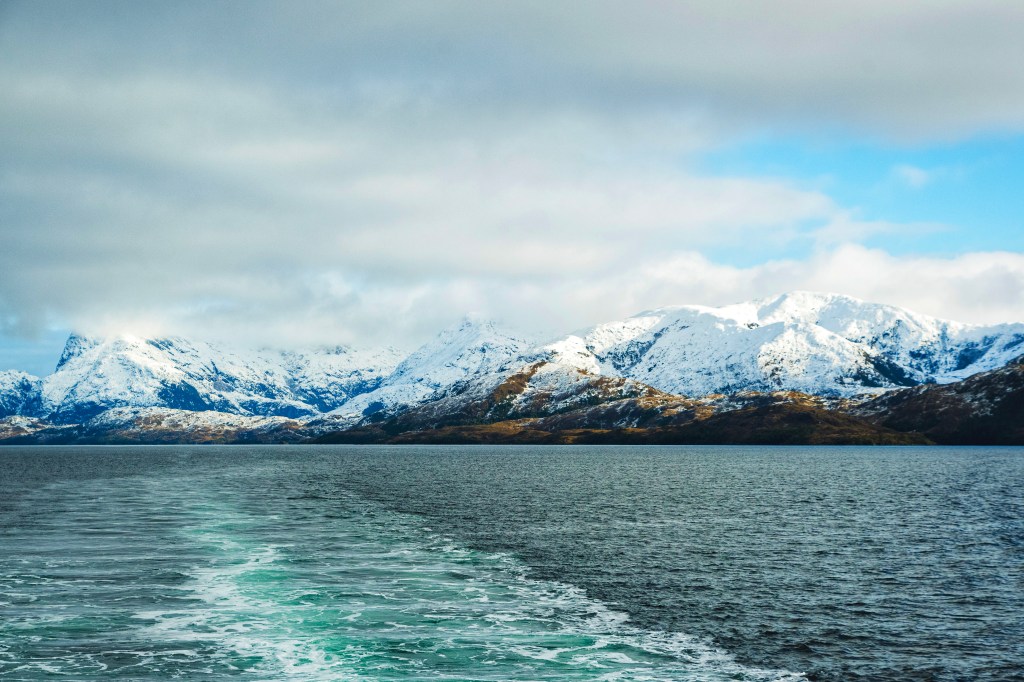


The terrain has changed dramatically since we left Punta Arenas. To the left, there are the familiar snowy mountains, their peaks draped in white, just as I had expected. But the greenish landscape on the other side baffles me. It’s alive with tall waterfalls cascading down cliffs, vibrant and unexpected. How can a place like this exist here, after all only Antarctica lies beyond? The mysteries of nature never cease to amaze me. As more light filters through the overcast sky, the landscape reveals even more of its breathtaking beauty.
In the water, seals and sea lions leap gracefully, slipping in and out of sight like phantoms, playing in the wake of the ferry. I see them constantly, but photographing them is a near-impossible task. Every time I focus my camera, they vanish beneath the surface, only to reappear somewhere completely unexpected.
By noon, I find myself going back and forth from the deck to the warmth inside the ferry. I can’t stand the cold for more than ten minutes at a time—the wind cuts through everything. But despite the biting chill, I return to the deck again and again. Some views are too precious to experience through a pane of glass.
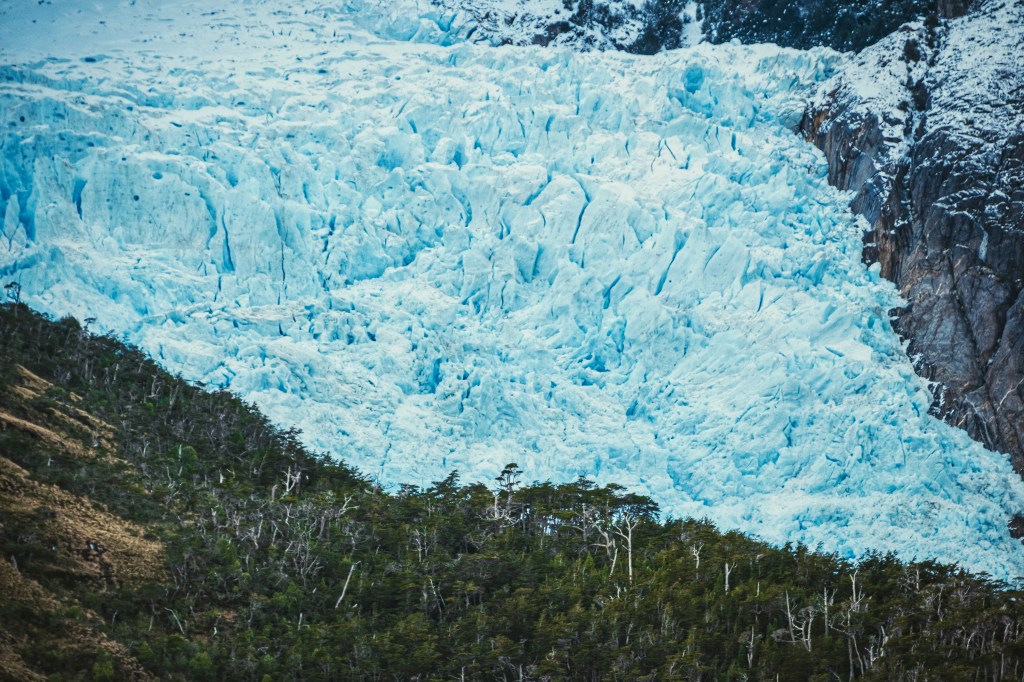
Finally, the sights I’ve been longing for come into view. First, I spot Concepción, an ice-blue glacier that spills from the mountains like a frozen landslide. Then, more glaciers appear, each one unique in shape, size, and even the hue of their blue ice. How long it would have taken to form these gigantic things? The landscape unfolds before me like a scene from another world.
I’ve seen glaciers before—just last week during my trek in Torres del Paine—but here, in this remote solitude, they strike me differently. The ferry is nearly full, yet no one else seems interested in coming up to the upper deck. A few passengers step onto the lower deck for a quick smoke before retreating back inside. Perhaps they are locals, used to these sights. But for me, standing alone on the deck, it feels like I’m the only one drifting through these channels. The solitude magnifies the beauty, and I’m overwhelmed by the stillness of it all.
As I lose myself in the scenery, two dolphins suddenly appear, playful and sleek. They blow air through their blowholes and dive back into the water, vanishing just as quickly as they arrived. I wonder if I’ll be lucky enough to spot an orca or a blue whale before the journey ends.
The Yaghan continues to glide through the waters, its name a tribute to the indigenous Yaghan people who once lived here. They thrived in this harsh environment, hunting seals, dolphins, whales, and guanaco—creatures of a world that, for them, was both wild and home. It’s incredible to think about how they survived in such a remote place. But after the arrival of European settlers, many of the Yaghan were killed, their numbers dwindling under the violence and diseases brought by colonization.
In the ferry’s cafeteria, a picture of Cristina Calderón hangs on the wall. Her name stirs a memory from a podcast I listened to about her life. She was the last of the Yaghan, the final speaker of their ancient language, who passed away only a couple of years ago. With her death, the last vestige of an ancestral culture vanished. Just months ago, in the warmth of my tropical hometown, I had listened to her story. Back then, I had already begun planning my trip to South America, but I never could have imagined I’d find myself here—drifting through these forgotten channels at the edge of the world, where she spend her whole life.
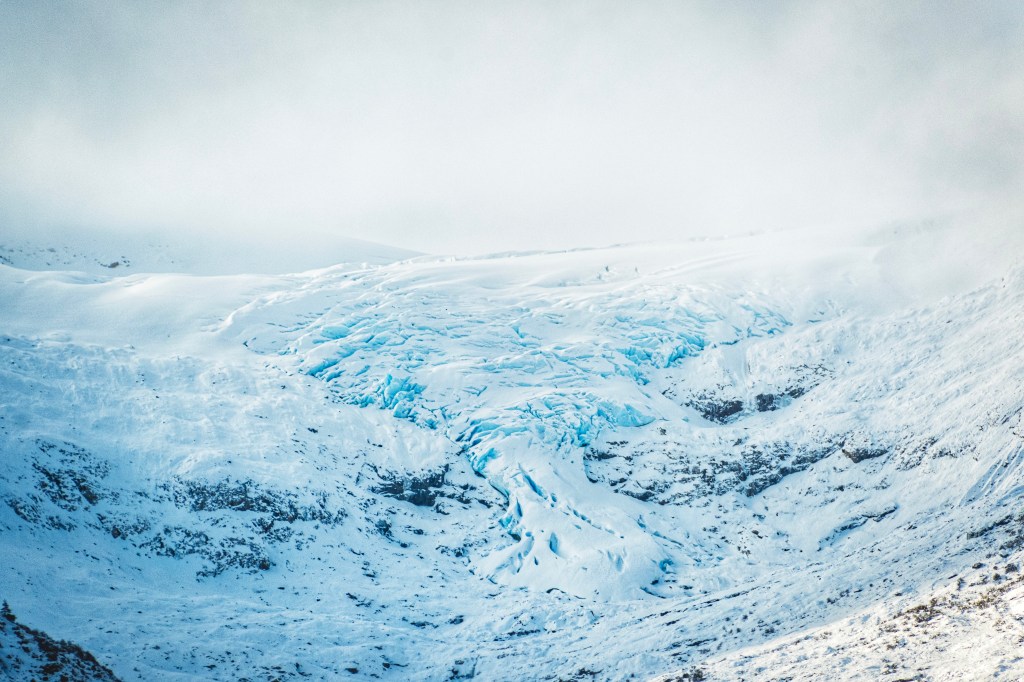
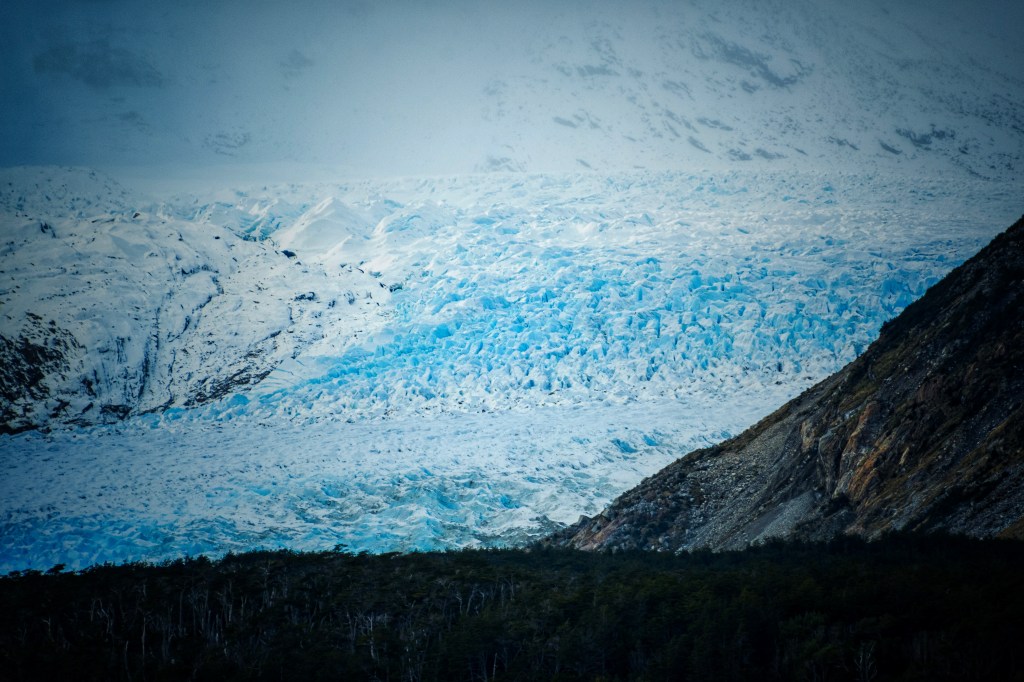


In this moment, surrounded by glaciers, seals, and the vast emptiness, I feel the weight of time, history, and loss. And yet, I also feel a strange, quiet peace, knowing that I’ve come this far, following a path that connects me, even briefly, to a people and a land so distant from my own.
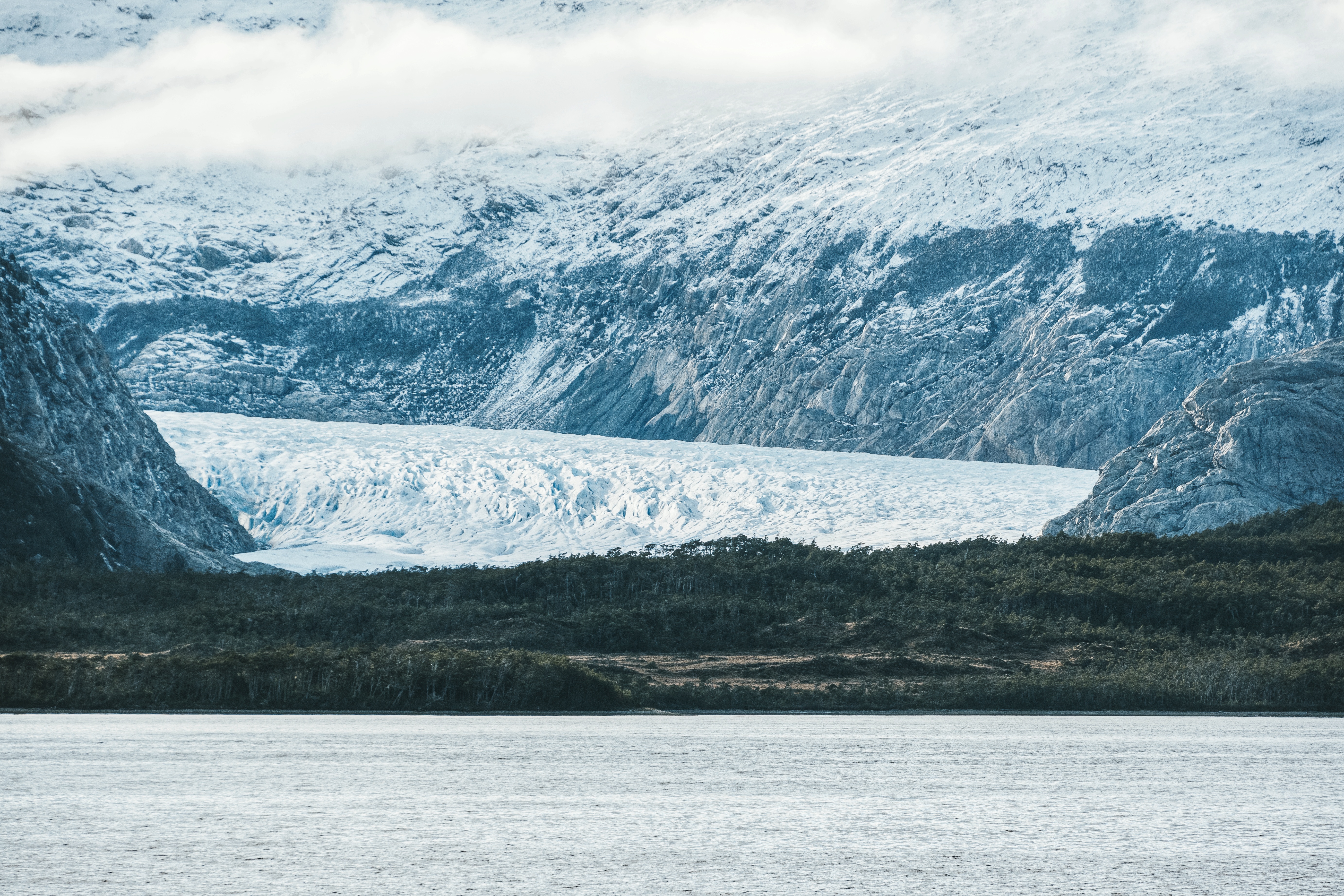
It’s about 3 p.m., and I’m back on the deck, but this time I’m not alone. My fellow passengers have joined me, and I know why—they’re all here for Italia, the highlight of this journey. When even the locals gather to witness something, you know it’s going to be extraordinary.
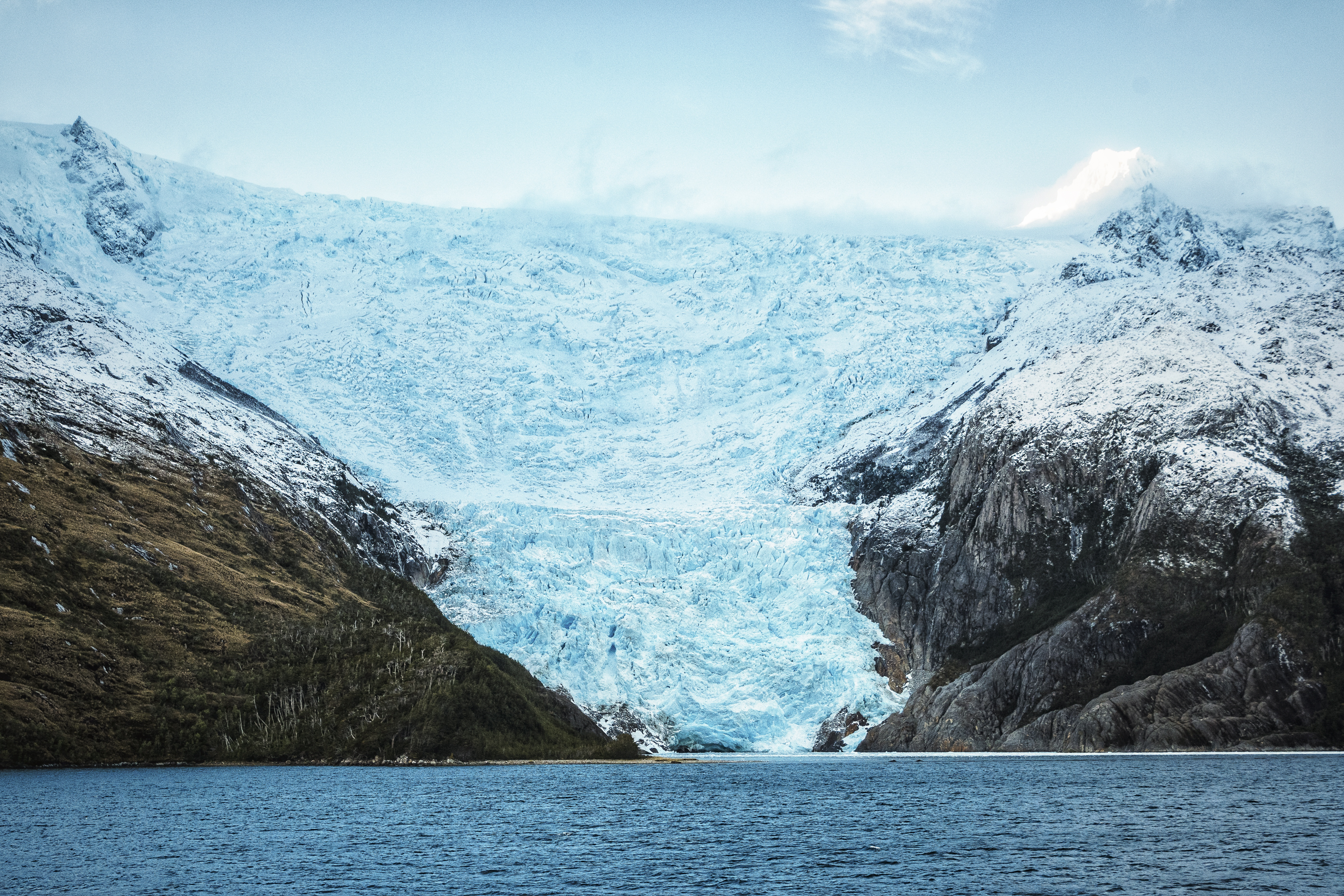
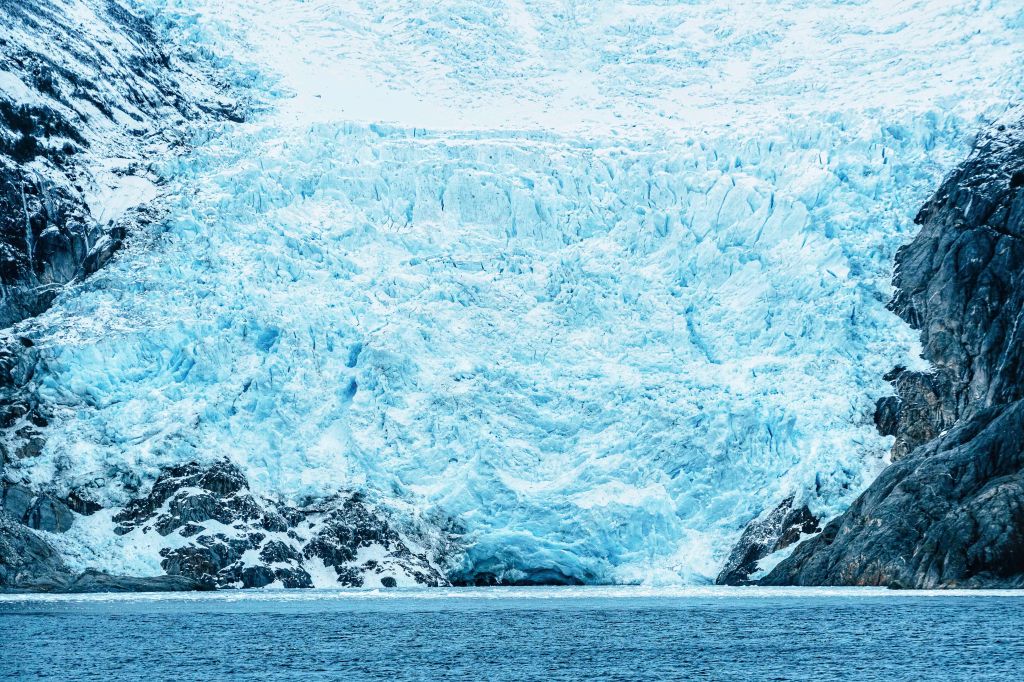
Between two towering mountains, the glacier’s tip first appears, barely touching the water. As we slowly sail forward, Italia reveals itself in full—its immense, icy wall standing before us like something out of a fantasy. It immediately reminds me of the Wall from Game of Thrones, a colossal barricade of ice, but this one is real, built by nature’s hand over millennia. Italia stands like an arch dam, formidable and silent, greeting the ferry that passes only once a week. All around me, people fall silent, mesmerized by its grandeur. Nature has a way of humbling you in moments like this.

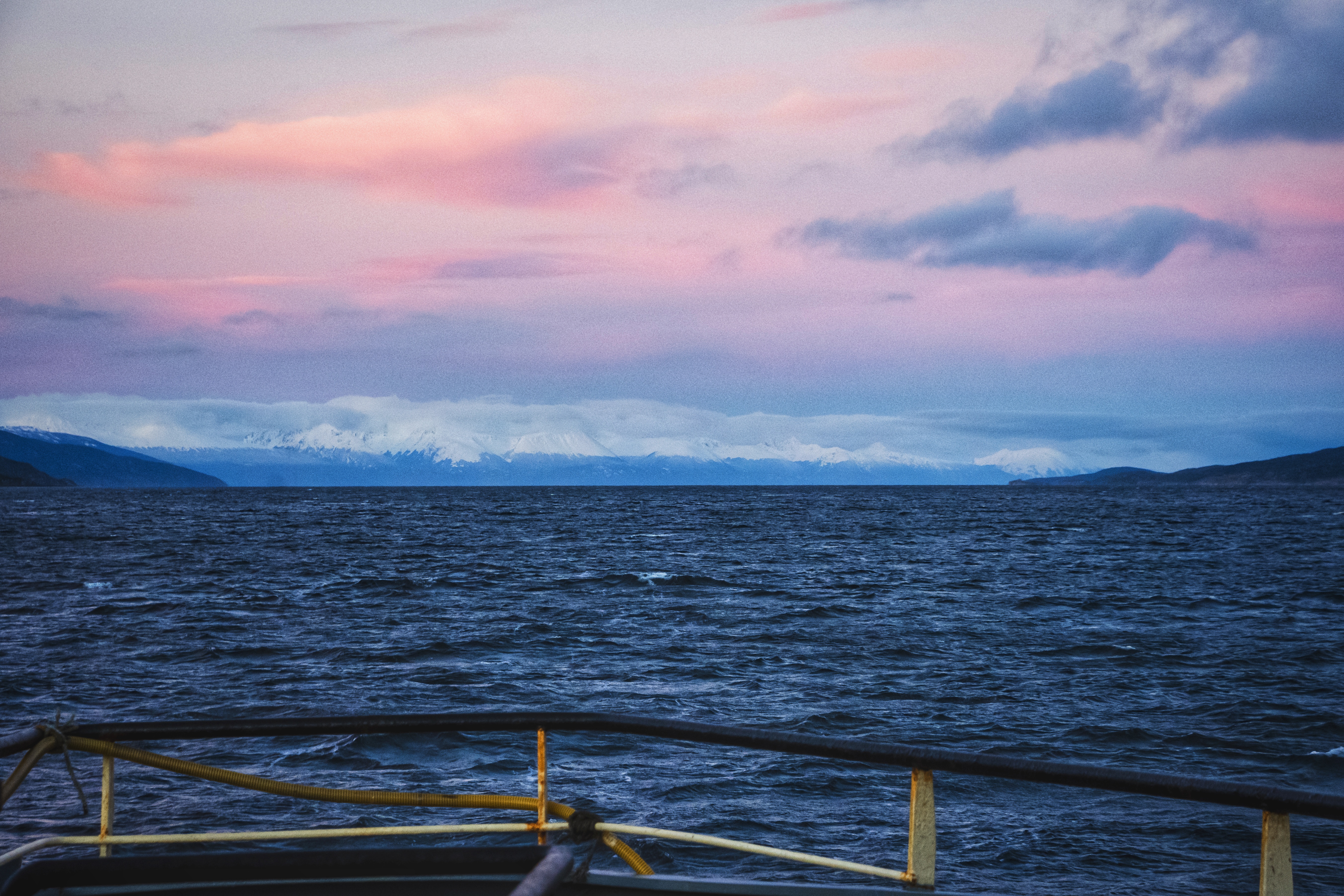
As the ferry enters the Beagle Channel, the horizon shifts. Against the backdrop of a dusky, pink-painted sky, I see the snow-capped massif of Argentina. Could there be a more beautiful sunset than this? In the past month of my travels across South America, I can’t recall anything quite like it.
Moments later, the Yaghan makes an unexpected turn to the left. What’s going on? I check my map—this isn’t Puerto Williams. We’ve arrived at Yendegaia, a remote settlement at the edge of Chile. While my destination has an airport and regular ferry routes, for which the prices are cheaper than later, Yendegaia doesn’t have that luxury. It is completely cut off from the world, except for this weekly ferry. Outside, in the darkness, the flashing beacon lights of vehicles illuminate the scene. It looks like a military camp, perhaps Chile’s last frontier on this side of Tierra del Fuego.
Inside, the cabin is nearly empty. Most passengers have disembarked, except for a few medical students heading to Puerto Williams for their mandatory three-month service. Through the porthole, I spot city lights in the distance. Ushuaia! Cursing myself, I rush outside into the cold. Of course I need to go out. What kind of traveler would I be I if I don’t go and see this elusive city? With numb hands, I fumble for my camera to record the lights. Ushuaia is much larger than I imagined. Had I received my Argentina visa in Foz do Iguaçu, I would’ve traveled here, not to Puerto Williams. But now, I can only glimpse it from across the channel.


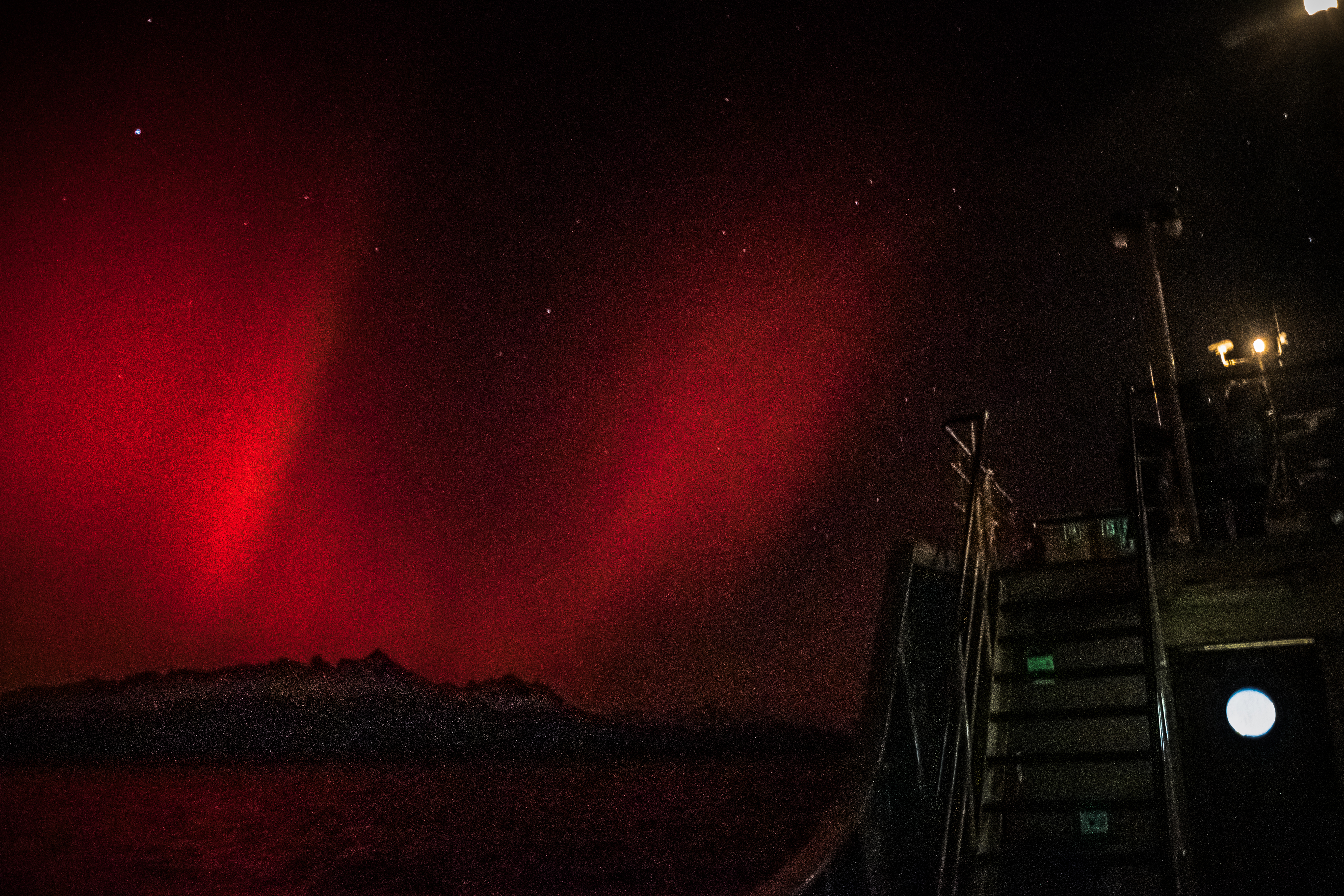
The right side of the sky is glowing in a bright reddish color. Probably the remnants of dusk.
But wait—sunset was two hours ago, and it was already dark when we left Yendegaia. Could it be? No, it can’t be… Can it?
I blink and look again, my heart racing. I’m seeing the southern lights! Aurora Australis. All my life, I’ve heard about the Northern Lights, but I’d forgotten they existed here too, on the opposite pole. I dash back into the cabin, layering up as quickly as I can, and the students join me, their jaws dropping in awe at the strange, magnificent red sky. The fact that they’re from Punta Arenas and seeing this for the first time tells me how rare this moment truly is. Have I gotten incredibly lucky?

Unlike the dancing green auroras I’ve seen in videos, this red light beams still, as if projected from some hidden laser. I’ve never heard of the auroras appearing in red before. What a moment. For years, I’ve dreamed of witnessing the Northern Lights, planning trips to Iceland or Norway to see them. But here I am, unexpectedly watching the southern lights, far from where I thought this dream might come true.
The red glow slowly fades, and within 20 minutes, the sky returns to its normal, dark setting, as if nothing had ever happened. A fleeting, magical moment, now gone. As I recline my seat for a brief sleep before we dock at Puerto Williams at midnight, a thought crosses my mind: if my journey ended right here, I’d go home happy.

At World’s End
The streets of Puerto Willams are deserted, or perhaps they always are. Somewhere around midnight we had docked. Luckily just opposite of the port there was an inn for me to sleep through the remaining night.
“During the season, orcas comes through here to hunt seals”, Ariano my inn keeper says wistfully by looking over Beagle channel. It is clear I just missed the prime time to witness the area’s wildlife. The blue whale tours, which take visitors out to the open ocean, has ended with the season. Greedy, perhaps, for wanting more, I am bit disappointed.

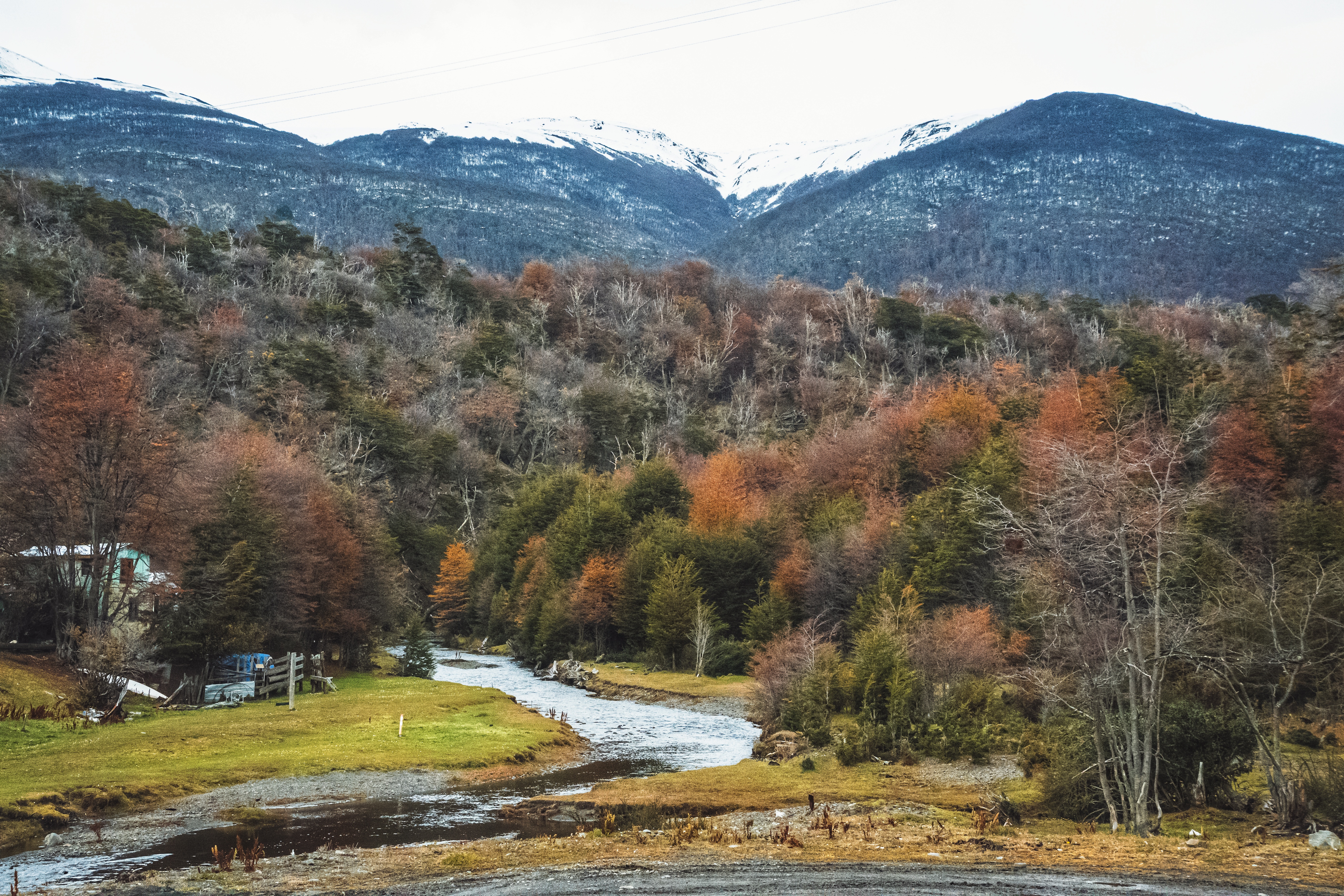
Behind the town, thick bushes crowded the hillsides. The autumn leaves on the island of Isla Navarino are falling fast in the brisk air for the early winter. With my still-sprained ankle, I walk slowly through the muddy path, following a stream that snaked southward. I wondered if the Yagán people had ever ventured over these hills, curious about what lay beyond. Their descendants still live here, in Villa Ukika, though they’re few in number now, and their bloodlines are mixed. Cristina Calderón, once lived here too, her presence lingering even after her passing.
The ferry has started its return journey before I reach the dock. Seagulls fly behind it as she tears down the strong current. They need to wait another week for her to return. I would not be on that ferry; in two days, I’d be flying back to Punta Arenas instead.
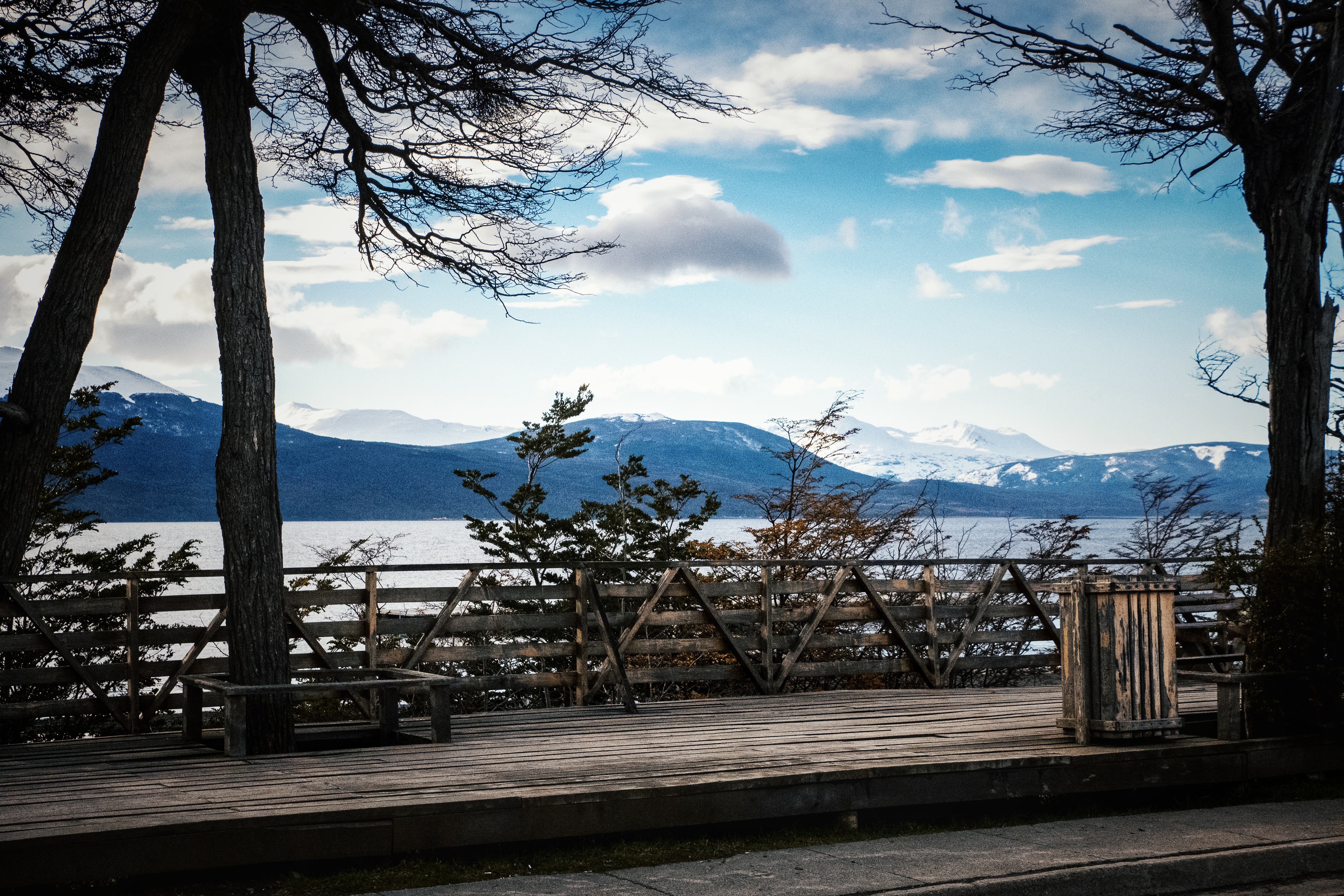
Climbing the hill behind the town offers a sweeping view of Puerto Williams. Its hospital, church, museum, and shopping streets clustered tightly together. With a population of about 3,000, most people live close to the town center, though a few houses stretch toward the western edge, near Ushuaia. As I sit on a bench overlooking the channel, I feel the same sense of solitude I’d experienced years ago on the Shetland Islands, at the northernmost edge of Scotland.



I could picture the HMS Beagle cutting through these waters, carrying a young, unknown scientist on a journey that would reshape history. Charles Darwin sailed through these same channels, and from the remote archipelagos, he gathered crucial insights that would eventually form his theory of evolution. Sitting here, it is hard not to feel the weight of that legacy, the vastness of time stretching back and forward, and my small place in it.
‘There could be more solar flairs tonight, says the scientists’, I remember what Ariano told me in the morning, as I tucked inside the bed sheet to escape from the lightning and storm outside. The nature isn’t kind today. I just hope this wooden cabin doesn’t fly away in this howling wind!
Monday arrives and it is time to go back. I hadn’t done much during my stay—just a few walks and a lot of quiet reflection—but I don’t regret it. Ariano dropped me at the airport where passengers pickup their luggage staright from the taxiway. In this small town everyone seemed to know each other. Through the window of my airplane, almost the entire town is squeezed in, the little town of Puerto Williams, at the end of our world..
Minutes later I am up in the air. The island is shrinking fast in my eyes. But the memories will only get bigger as I move ahead in time. A story about the journey to end of the world is something I will tell many times…
Join me on my journey to Puerto Williams
How to get to puerto Williams
Punta Arenas is the nearest city in Chile and Ushuaia in Argentinian side. You can take ferry or a flight to Puerto Williams from Punta Arenas. During season, there are ferry from Ushuaia to Punta Arenas as well.
- Ferry from Punta Arenas to Puerto Williams
- 33 hours of journey in the ferry, Yagan.
- Ticket price – 140,00 CLP/ $ 145 (food included)
- Book your tickets from TABSA website or their ticket office in Tres Puentes, Punta Arenas.
- Ferry departs twice a weekly in season and once in off-season.
- Flight from Punta Arenas to Puerto Willimas
- Hardly an hour’s journey.
- Ticket price – 100,00 CLP/ $ 100 (cheaper than ferry!)
- You can see the birds eye view of the huge glaciers.
- Book the flights from Aerovías DAP website.




 Notes From Dreams
2 responses to “Puerto Williams, Chile – A Journey To End Of The World”
[…] waiting for my ferry to Puerto Williams in Punta Arenas, surrounded by choices like Magellanic, Humboldt, and Gentoo penguins, I made the […]
LikeLike
[…] kilometers beneath the sea’s surface. The epicenter was located 218 kilometers south of Puerto Williams and approximately 2,500 kilometers south of Santiago, according to the University of […]
LikeLike