How many of us haven’t dreamed of a full blown safari in the African savanna to see mighty animals roaming free, fueled by countless hours of watching National Geographic documentaries? Kenya is arguably the best destination to witness this grand spectacle of Mother Nature. It perfectly balances the raw wild with excellent infrastructure, boasting easy international flights and a huge variety of comfortable lodges.
In 2025, my partner and I headed to Kenya for a vacation just to witness its sheer beauty firsthand. If you are planning your own adventure, consider this your honest guide. This blog will help prepare you for your trip of a lifetime to this beautiful East African country.

Where to travel: Beyond the Mara
Like most people, going into this trip, I had heard plenty about the legendary Maasai Mara (named in honor of the local Maasai people and the Mara River). It was the main character of my itinerary.
But what I quickly realized is that Kenya is holding out on us with a bunch of other spectacular parks, some even bigger than the Mara!
- Amboseli: Where you get those majestic, postcard perfect views of Mount Kilimanjaro towering in the background.
- Lakes Nakuru & Naivasha: The absolute go to spots for epic bird watching, plus fantastic odds of spotting rhinos and dodging hippos.
- Tsavo: Elephants central!
The classic tourist move is to hit the Mara, Lake Nakuru, and Amboseli in a neat, clockwise loop. However, since we were flew in with a family visit agenda as well, we skipped Lake Nakuru altogether to spend a couple of days with my cousin in Nairobi.

Our 8-Day Kenya Itinerary at a Glance
- Day 1: Arrival in Nairobi (Rest and settling in)
- Day 2: Nairobi (Exploring the Giraffe Centre & family time)
- Day 3: Transfer to Amboseli National Park, (optional evening game drive).
- Day 4: Full day game drive in Amboseli
- Day 5: Morning game drive in Amboseli, followed by a transfer back to Nairobi
- Day 6: Transfer to the Maasai Mara via the stunning Great Rift Valley, capped off with an evening game drive
- Day 7: Full day game drive in the Maasai Mara
- Day 8: Final transfer back to Nairobi
How to Travel
Getting to the parks independently is very difficult due to the weak public transit network on the outskirts. Like most tourists, we booked a package. We went with Bencia Africa Adventure & Safari Ltd., mainly because they were one of the cheapest options we could find. Another option is to rent a vehicle in Nairobi and travel independently. In this case, spotting the animals will be entirely in your hands!
Pro Tip: When you go budget, be prepared to roll with the punches. We were given our itinerary weeks in advance, but it wasn’t until day one that we realized we were actually heading to Amboseli first.
Transport usually involves an open roof 4×4 Toyota Land Cruiser or a 9 seater safari van, which acts as your airport shuttle and your chariot for the ‘game drives’, which is what the safaris are called. Group travel is basically social roulette. You just have to cross your fingers that your co-travelers are decent human beings. We got incredibly lucky with fantastic companions, but if you want to avoid the risk entirely, you have to shell out for a private vehicle.

When to Go
The brochures claim June to September is the peak season to watch millions of wildebeests cross the crocodile infested Mara River. We aimed for mid September. Unfortunately, the Great Migration wasn’t feeling particularly “great” that week, and we missed the main event.
Budget
Safaris are not budget friendly. Period.
- Our Tours: Amboseli cost us $450, and the Maasai Mara was $600 (including park tickets, transport, stay and food).
- The Park Fees: In 2025, the Kenyan tourism department drastically hiked the Maasai Mara entry fees. During the high season (July to December), it jumped from $100 to $200 per person. It drops back to $100 for the rest of the year.
Nairobi: The Starting Line
Nairobi itself is a city of intense contrasts. As we drove to the tour office at Uganda House, a building heavily damaged during the recent Gen-Z led anti tax protests, the economic strain and unemployment in the city were palpable. The streets, particularly in the Central Business District, are also packed with TikTokers filming content. Yet, despite the obvious struggles, the people are incredibly kind, hospitable, and armed with a great sense of humor. This was especially true to every other local and guide we met along the way.

Since accommodation was covered by my cousin, we rested up before hitting the Giraffe Centre the next day. If you’ve never seen an endangered Rothschild’s Giraffe up close, their sheer size will leave you speechless. For about 1,500 Ksh, you can hand feed them from a raised platform. (If you have an unlimited budget, you can stay at the nearby Giraffe Manor and have them poke their heads through your window, but we were perfectly happy with the day pass!). If you have an extra day, you can visit the Nairobi national park, which can be a starter into your wildlife journey.
For food I strongly recommend Cultiva Farm Kenya, which felt like a quiet pause before the journey truly began.
Amboseli: Dust Devils and Disappearing Snow
Amboseli translates to “salty dust” in the Maasai language, and it lives up to the hype. The five hour drive from Nairobi was filled with “dust devils” (mini tornadoes sweeping across the arid plains). We even saw small herds of zebras casually grazing near human settlements along the road, looking exactly like stray cows back home.
We stayed at the Kimana Amboseli Camp just outside the park boundaries. It’s basic, but it boasts a phenomenal view of Mount Kilimanjaro. Despite what my childhood brain thought, Kilimanjaro is actually in Tanzania, but Amboseli offers the ultimate front row seat to its glory.

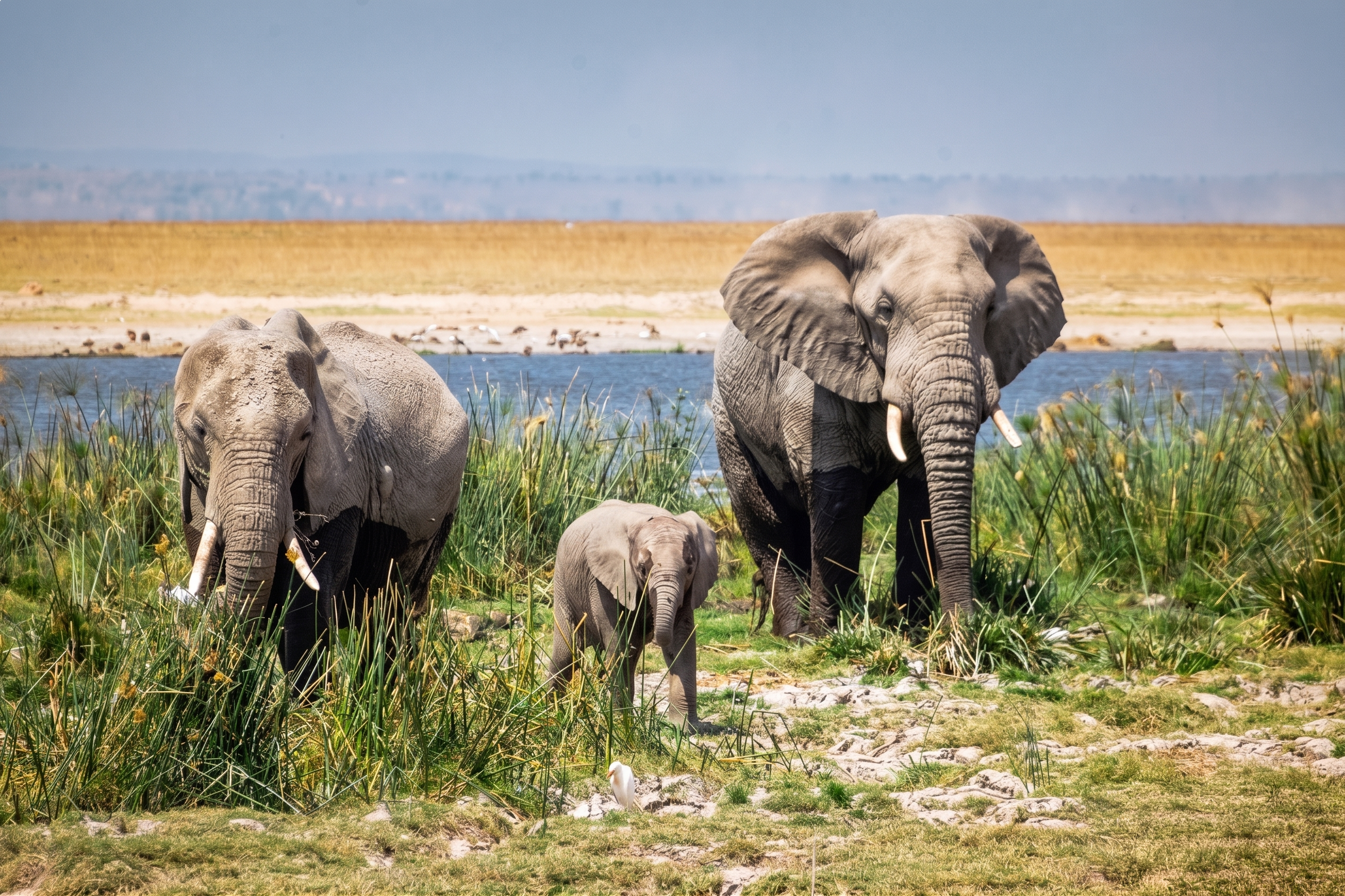
Amboseli is smaller than the Mara, meaning you rarely drive far without spotting wildlife. Although Tsavo Park is the best place to see the majestic African elephants, Amboseli has no shortage of them either. In any given direction, after a few minutes, we would spot them, mostly as a group, and sometimes a few lonely ones. The sight of them moving and throwing white sand on their bodies is pure bliss.


You can see cheetahs in both parks, but seeing 5 of them together (although I only got 3 in the same frame) in the golden hours of Amboseli was truly magical. When the guide himself gets excited for that, you know how rare these moments are.

During our drive, I mentioned to our guide, George, that scientists predict Kilimanjaro’s snowy cap could vanish forever due to global warming. He went quiet for a moment before replying, “Kilima means mountain, and Njaro means white or shining. That is how Kilimanjaro got its name. So perhaps we might have to change her name to just Kilima. That is too sad.”
A Word on the Food
Because East Africa has a large Indian population dating back over a century, North Indian staples like chapatis and samosas are fully integrated into the cuisine. The local dishes are mostly rice and curries, though far less spicy than what we are used to.
One surprise: beef is highly popular here, arguably more so than chicken in the tourist spots. Coming from a part of India that absolutely reveres beef, we were thrilled.

A quick warning on safari dining: quality wildly depends on your hotel. Our Amboseli camp had a bad culinary reputation, so our tour company actually brought a cook from Nairobi just for us! However, no matter how posh your hotel is, the packed lunches they send with you on full day game drives are universally terrible. We compared notes with other tourists, and it seems bad packed lunches are simply part of the authentic safari experience.
The Maasai Mara
The Mara is undeniably the star of the show. This is where things got incredibly real, incredibly fast.
They say the Mara is also the best place to see lions. We were jumping in the van when we saw a single lion in the distance in Amboseli, but in the Mara, you run into them almost every hour or so. This is where we witnessed lionesses hunting. The coordination, speed, and focus were incredible to watch. It was also a reminder of how raw and unforgiving nature can be. But watching these massive predators play around just like giant house cats right after a kill is honestly so confusing, haha!


The best time for game drives as you can imagine is early morning and late evening. During these hours, animals are more active, and the temperatures are lower.
Leopards are the most elusive animals here, I would say. They seek solitude like tigers, and many weeks could go by without anyone spotting them in the vastness of the Mara. Again, we were lucky to see them on both days, one time while it was having its dinner of an antelope on top of a tree.


We stayed at the Mara Ntulele Camp. Although it was not the original place we were told about, it turned out to be comfortable and welcoming. The staff added a lot to the experience with their warmth and humor. We did opt out of the popular Maasai village tour, though. The villages are situated just outside the park for a nominal entry fee of $20, but it felt a bit too performative for our taste.
The majority of tourists stay in hotels located just outside the national park boundaries, but there are a few options situated right inside the parks, too. Be warned: these are very high end, expensive lodges. Still, I can imagine that waking up, grabbing a hot cup of tea, and watching the animals roam right past your window is an experience you just have to pay a premium for these days!

Souvenirs: During rest stops between travel, you’ll find massive curio shops selling local crafts, sculptures, and masks. Brace yourself: they will quote you an absolutely extravagant starting price. It is entirely up to your bargaining skills to negotiate it down to something reasonable.
Visas & eTA Requirements
For many countries, including India, Kenya offers visa free travel. However, you do still need to obtain an Electronic Travel Authorization (eTA) before entering the country. This costs around $30 to $50, depending on whether you need a single or multiple entry pass. You can apply directly through their official website etakenya.go.ke. They state that it usually takes 3 to 5 business days for approval, but we actually got ours in just a single day.
Vaccinations
Travelers from India (and many other countries) MUST present a valid Yellow Fever vaccination certificate upon entry to Kenya. Importantly, the shot must be administered at least 10 days prior to your arrival. Additionally, an Oral Polio Vaccine (OPV) dose taken at least four weeks before departure is highly recommended, and sometimes strictly required.


A quick warning for my fellow Indian travelers: getting these appointments can be surprisingly difficult because there are only a handful of authorized hospitals that provide them. Do not procrastinate on this! Because the slots fill up fast, I highly recommend getting your vaccinations sorted at least a month before you fly.


At the end we might have completely missed the memo on the Great Migration, but had a great time travelling this amazing country, experiencing the great hospitality of the people. When I think back to the sight of those five cheetahs glowing in the golden hour, or that elusive leopard casually having an antelope for dinner up in a tree, or the absolute confusion of watching brutal lions roll around like overgrown house cats, all the bumpy roads and budget tweaks completely fade away!! Kenya is wild, unpredictable, and totally unforgettable.